5 Ways on how you can improve your productivity

Do you often find yourself struggling to get things done in a timely and efficient manner? Are you constantly trying to juggle multiple tasks at once, only to find yourself making mistakes and taking longer to complete them? If so, it might be time to rethink your approach to productivity. In this blog, I’ll be discussing five tools and strategies that can help you boost your productivity and accomplish more in less time.
1. Stop multitasking
Despite contrary belief humans aren’t capable of multitasking, the human brain cannot perform two tasks that require high-level brain function at once. However, to be completely fair there was a study found that just 2.5% of people are able to multitask effectively, but the rest of us 97.5% of people try to do more than one thing at once, we will be more likely make more mistakes and it will result in us the task, project or whatever the case maybe longer to do.
Instead of multitasking, try batching similar tasks together, prioritizing tasks based on their importance and urgency, delegating tasks to others if possible, scheduling specific times for certain tasks, and focusing on one task at a time
2. Set goals
Goal setting has a significant impact when it comes to your productivity. It helps you focus your attention and energy on what matters most, which can lead to better results in less time. When you set goals, you create a roadmap for what you want to achieve and how you plan to get there. This helps you stay motivated and focused, even when things get tough
Research has shown that people who set specific, challenging goals are more likely to achieve them than those who don’t. Goals give you something to work towards and help you measure your progress along the way. They also help you prioritize your time and resources so that you can make the most of them.
3. Turn off notifications
Hands down one of the greatest impactors on our productivity in the 21st century are those notifications we get on our smartphones constantly. According to a study by the University of California, Irvine, it takes an average of 23 minutes and 15 seconds to get back to a task after being interrupted by a notification, what this means is that even if you only receive a few notifications per hour, you could be losing hours of productivity each day.
Another study from University of California, San Diego found that people who were interrupted by notifications made 50% more errors and took twice as long to complete tasks. The reason for increases errors and the increase in completing tasks is because notifications cause your brain to switch tasks, which can lead to cognitive overload and decreased productivity.
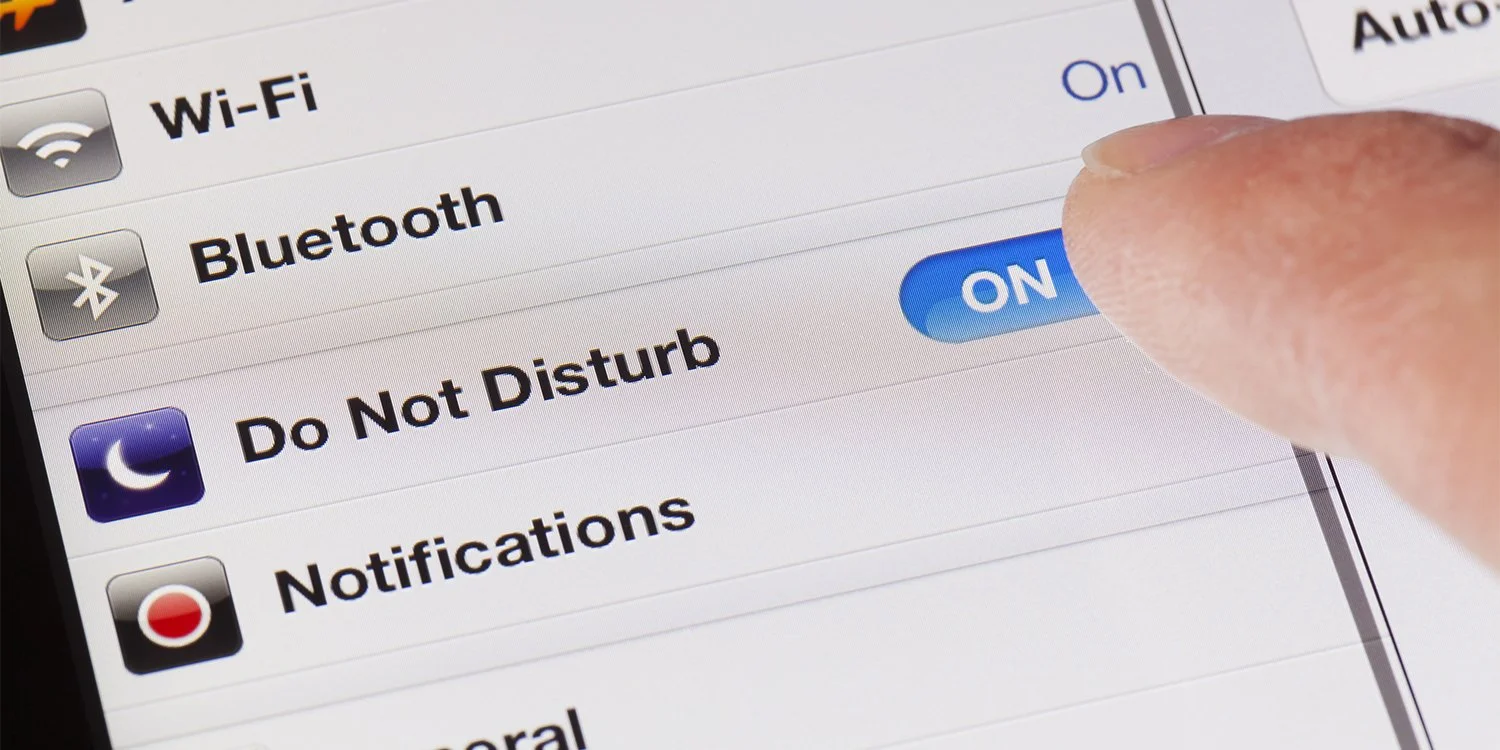
To avoid notifications from impacting your productivity, customize your notifications in your settings on your device, and turn off notifications for applications that aren’t import (such as social media). Depending on your device, you might be able to set “focus modes” which you can program to block certain categories of apps all together to reach your device, at specific set times (e.g 9 AM to 5 PM) or allow certain contacts to be able to get a hold of you (e.g Grandmother). Another few alternatives could be to put your device on silent or Do Not Disturb mode.
4. Take breaks
To some it might be a surprise to some, according to various studies taking breaks can have a significant positive impact on your productivity. According to a study by the University of Illinois, taking short breaks throughout the day can help maintain focus and improve productivity
Another benefit of taking breaks is that it can help reduce stress and prevent burnout. On top of that it can help you avoid decision fatigue, which is when you become less effective at making decisions after making too many, which at the end of the day impacts your productivity as well.
Besides all the benefits of taking breaks it’s consider and acknowledge the fact that taking too many breaks or taking breaks that are too long can have a negative impact on productivity, at the end of the day you want to strike the right balance that works for you, your studies or company.
5. Eisenhower Matrix
The last tool on this list that can help you to improve your productivity is the Eisenhower Matrix. The Eisenhower Matrix is a productivity tool that helps you prioritize tasks based on their urgency and importance. It was developed by former US President Dwight D. Eisenhower.
The matrix consists of four quadrants that help you categorize tasks based on their urgency and importance:
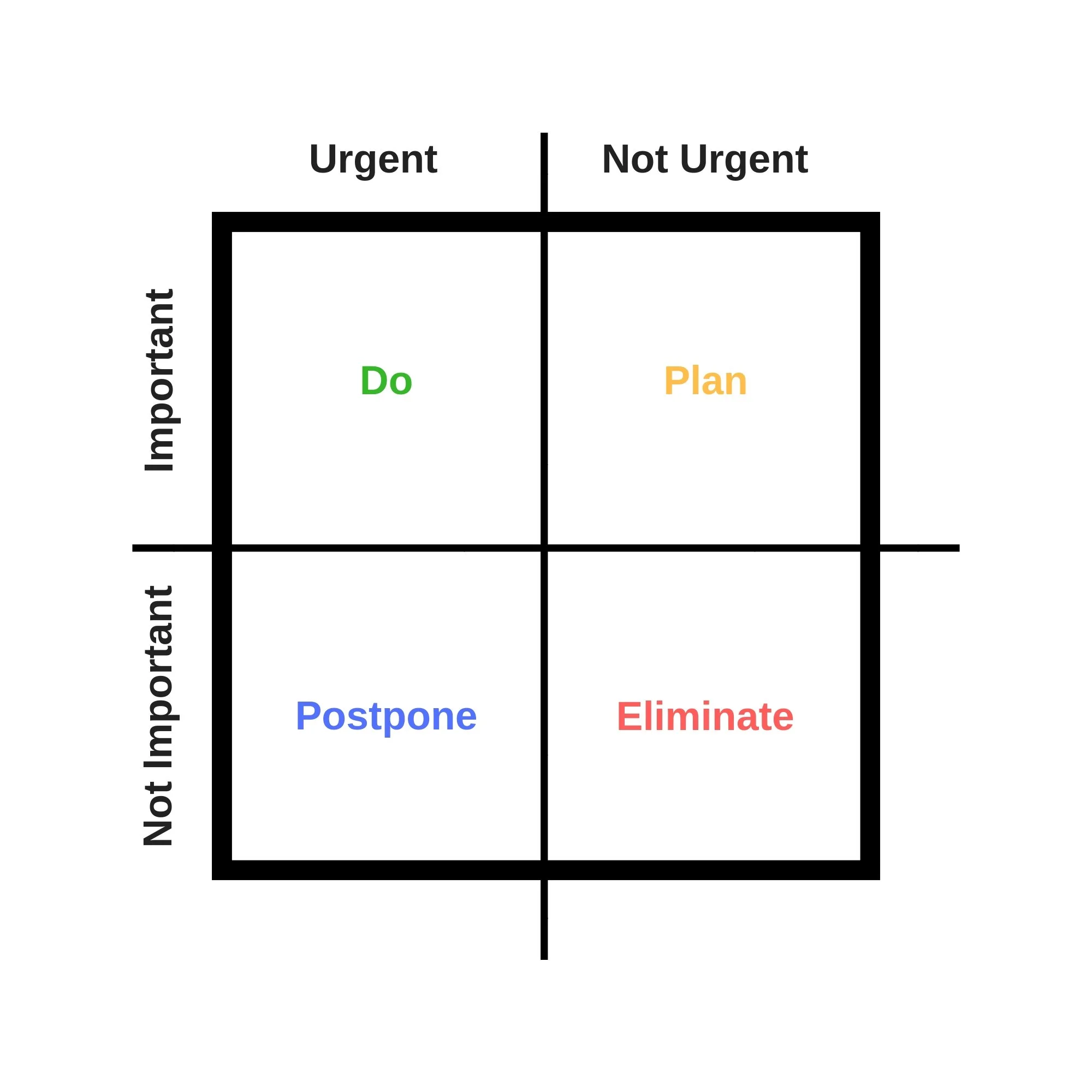
By categorizing tasks in this way, you can focus on what’s most important and avoid getting bogged down by tasks that are less important or can wait until later. The benefits include the training yourself to make informed decisions, quicker, becoming better at evaluating what is urgent in your day-to-day life and what isn’t, managing your time more effectively, being more accurate at tracking and analyzing your progress and habits, having less task-related stress, and completing tasks more quickly, efficiently, and confidently
Conclusion:
Improving your productivity isn't about working harder or longer, but about working smarter. By implementing the tools and strategies we've discussed, you can prioritize tasks, minimize distractions, and stay focused on what's most important. From batching similar tasks together and setting goals to turning off notifications and taking breaks, these tips can help you make the most of your time and achieve your goals with greater ease and efficiency. So why wait? Start implementing these productivity hacks today and see the difference it can make in your life!
Sources:
Adams, C. (2010). Can People Really Multitask? ThoughtCo. https://www.thoughtco.com/can-people-really-multitask-1206398
Staughton, J. (2017, January 31). Can Humans Actually Multitask? Science ABC; Science ABC. https://www.scienceabc.com/humans/can-humans-actually-multitask.html
Cleveland Clinic. (2017, June). The Science is Clear: Why Multitasking Doesn’t Work. Health Essentials from Cleveland Clinic; Health Essentials from Cleveland Clinic. https://health.clevelandclinic.org/science-clear-multitasking-doesnt-work/
Asana. (2022, December 15). 5 Multitasking Myths Debunked: 6 Ways to Be Productive Without Task Switching • Asana. Asana. https://asana.com/resources/multitasking
Asmus, S., Karl, F., Mohnen, A., & Reinhart, G. (2015). The Impact of Goal-setting on Worker Performance - Empirical Evidence from a Real-effort Production Experiment. Procedia CIRP, 26, 127–132. https://doi.org/10.1016/j.procir.2015.02.086
OakFlow. (2019, July 30). Goal Setting: How to Increase Productivity With Useful Goals. OAKFLOW. https://oakflow.com/blog/goal-setting-increase-productivity/
Riopel, L. (2019, June 14). The Importance, Benefits, and Value of Goal Setting. PositivePsychology.com. https://positivepsychology.com/benefits-goal-setting/
Lavinsky, D. (2021, November 24). How to Use Goal Setting to Boost Employee Productivity. Infinity. https://startinfinity.com/blog/how-to-use-goal-setting-to-boost-employee-productivity
Automated Dreams. (2019, August 9). The Impact of Notifications on Your Team’s Productivity. Automateddreams.com. https://automateddreams.com/blog/the-impact-of-notifications-on-your-teams-productivity/
Parker, J. (2017, February 20). Notifications are Destroying Your Productivity. Never Productive. https://neverproductive.com/notifications/
Divincenzo, K. (2020, August 18). How Effective Breaks at Work Increase Productivity. Www.work-Fit.com. https://www.work-fit.com/blog/how-effective-breaks-at-work-increase-productivity
Bartolotta, K. (2015, November 16). 5 Science-Backed Ways Taking A Break Boosts Our Productivity. HuffPost. https://www.huffpost.com/entry/5-science-backed-ways-taking-a-break-boosts-our-productivity_b_8548292
EISENHOWER. (2011). The Eisenhower Matrix: Introduction & 3-Minute Video Tutorial. Eisenhower. https://www.eisenhower.me/eisenhower-matrix/


Comments
Post a Comment